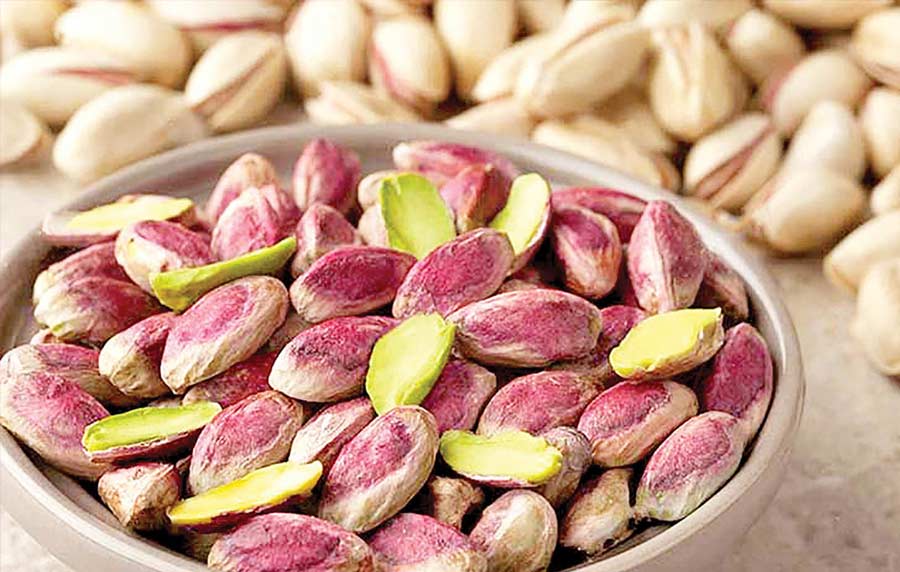
Numerous individuals commonly associate pistachios with specific regions in Iran, assuming each city offers distinct varieties. However, this notion requires clarification. While cities like Damghan and Rafsanjan hold renowned statuses in pistachio production, it’s crucial to understand that Iranian pistachios vary based on cultivation locations. This distinction becomes apparent when exploring cities such as Kerman, Yazd, and Qazvin, each contributing unique characteristics to the beloved Iranian pistachio. Let’s delve into the intricacies of Iranian pistachios, delving beyond regional reputations to grasp the diverse tapestry they weave based on city-specific cultivation methods. In this article we shed light on Iranian pistachios based on city.
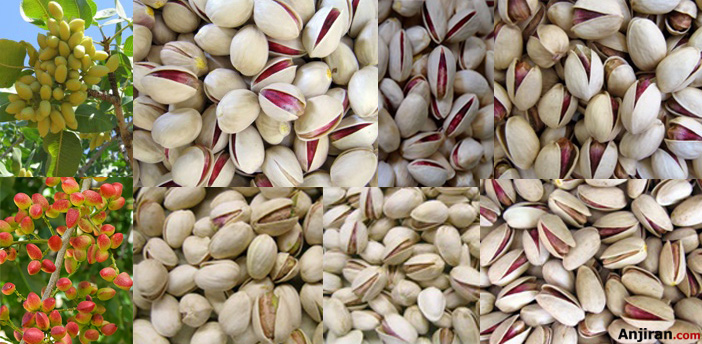
Types of Pistachio Damghan: Iranian pistachios based on city
Many people think that Damghan pistachio is one of the types of pistachio in Iran, like ramhead pistachio and round pistachio, etc. But we must say that it is not so! The types of pistachios that we have introduced here (Akbari, ramhead, round and Ahmed Aghaei) grow in Damghan, but Abbas Ali Damghan is the most famous type. This type of pistachio is one of the native species of Damghan and belongs to the Ahmad Aghaei pistachio family. Abbas Ali Damghan pistachio is one of the choices for Norouz and Yalda nuts because of its delicious taste and reasonable price.
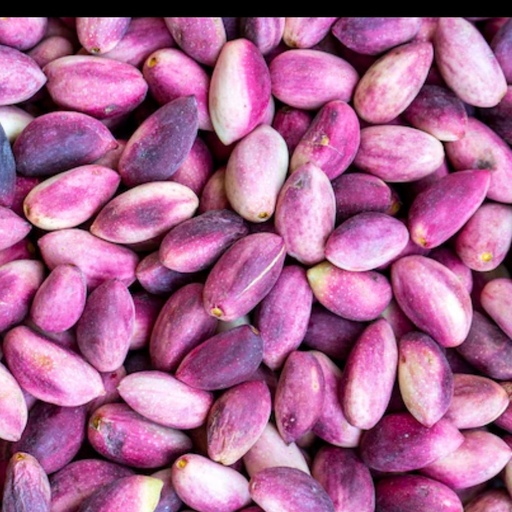
Types of Rafsanjan pistachios: Iranian pistachios based on city
Whenever we talk about pistachios, the name of Rafsanjan comes after it. This city is so famous for its pistachios that it can be nicknamed “Pistachio City”! However, if you think Rafsanjan pistachio is a special type of pistachio, you are very wrong. All kinds of pistachios are grown in Rafsanjan, the most important of which are Akbari pistachios, ramhead pistachios, Ahmad Aghaei pistachios and Ohadi pistachios.
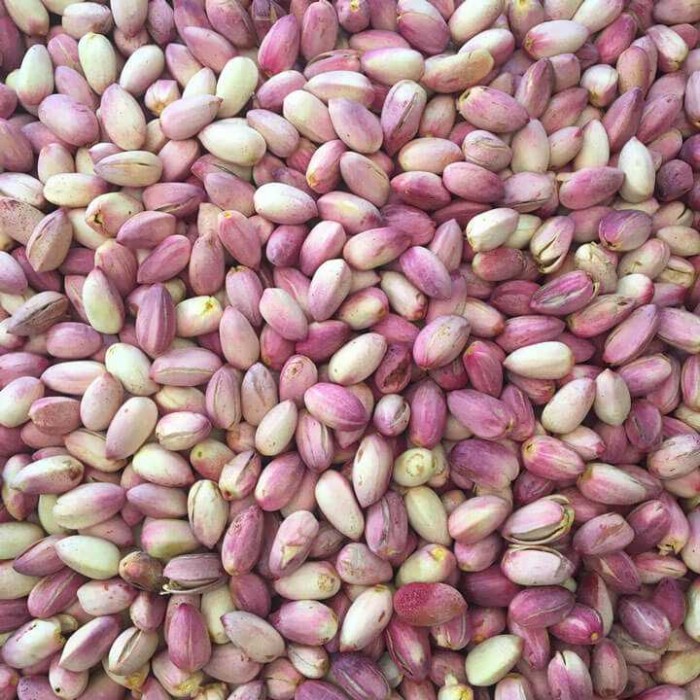
Kerman pistachio or Damghan is better? Iranian pistachios based on city
Pistachios are popular products all over the world and are exported to various countries such as Turkey, India, Germany, Vietnam, etc. All kinds of pistachios are grown in Iran in different cities such as Damghan, Rafsanjan, Semnan, Kerman, Yazd, Qazvin, etc., and the taste of Iranian pistachios is of high quality due to the special weather conditions, soil and agricultural land. Damghan is one of the main producers of pistachios in Iran and the pistachio product in this city is known as green gold. But the question that may arise is, Kerman pistachio or Damghan is better?
The history of pistachio cultivation in Semnan province and Damghan city is very long, and among the types of pistachios in Iran, it has taken the first place and is very popular in the world. Pistachio trees in Damghan grow in the best conditions and minimal chemical methods are used to maintain these trees. Various factors, such as sufficient irrigation, suitable weather conditions, strengthening and pruning of trees, etc., affect the quality of Damghan pistachios. There are different types of Damghan pistachios, including Abbas Ali pistachios, Shah Pasand pistachios, Akbari pistachios, Khanjari pistachios, etc.
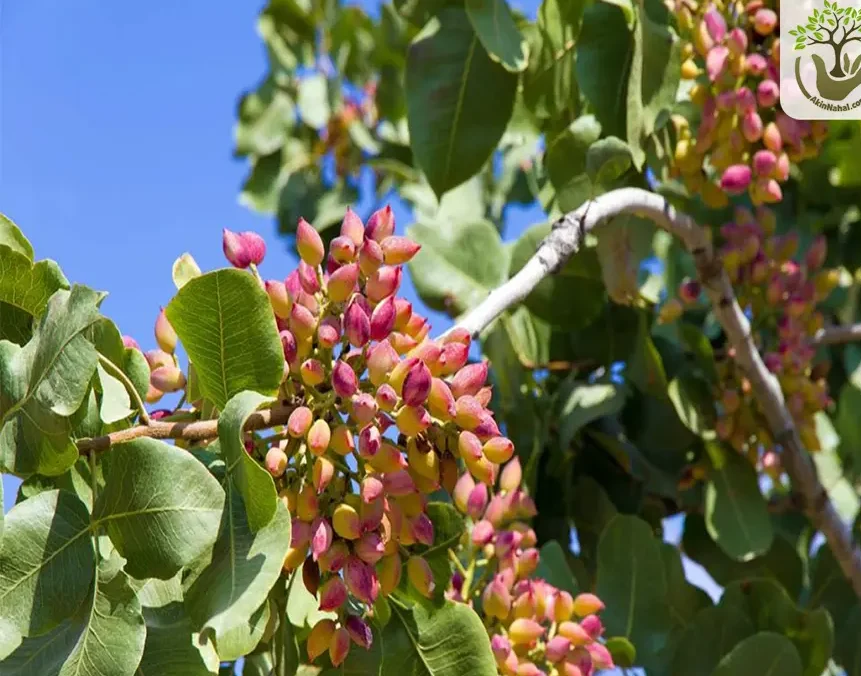
The pistachios of Kerman and Rafsanjan are of very high quality and have been noted in Iran and the world for their high quality and variety. Pistachio trees grow in favorable weather conditions in Kerman province and are produced in different types of Akbari, Ahmed Aghaei, round, ramhead, etc. Considering that the weather conditions are different in different cities such as Kerman and Damghan, the products will also be different from each other, but this does not mean that one is superior to the other and each has its own characteristics and quality.
Characteristic of high-quality pistachios
When we decide to buy a product, it is our right to expect a good quality that suits our needs and demands. It is the same when buying pistachios. Although some companies or nut stores offer their products with lower quality through various tricks, but knowing the characteristics of high-quality pistachios, you can buy a high-quality product. Pistachio is mostly sold with its outer shell, but in general, the pistachio kernel is also available in the market. If you are preparing pistachios with skin, it is better to look for unblemished shells that have a split at one end. Avoid buying pistachios whose mouths are too cracked.
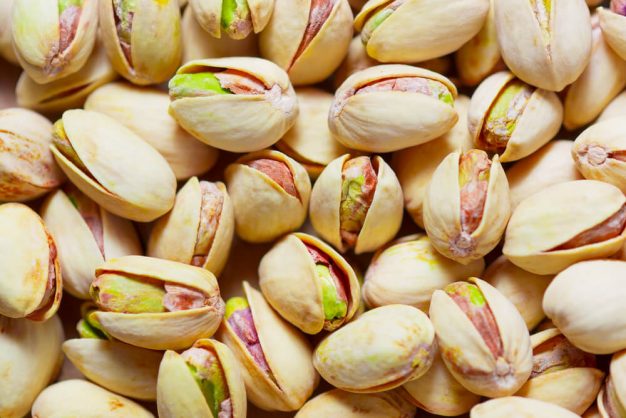
In addition, pistachios whose splits are not fully opened are not ripe, in addition to being difficult to peel. Pistachio nuts should be yellow or dark green in color, and the greener the pistachio you buy, the better the taste. When buying raw pistachios, you should be careful that the pistachios do not smell stale. Of course, since the quality of raw pistachios is easy to recognize, they are usually presented with good quality and are a good option to buy as you can roast and flavor them yourself.
How to distinguish high-quality pistachios from low-quality pistachios
There are different types of pistachio in Iran, each of which can be distinguished by its own appearance. Pistachios are delicious and expensive nuts that can be used to prepare mixed nuts. Despite the diversity among Iranian and foreign pistachios, maybe the type of pistachio is not very important, and in fact, the main concern is how to distinguish high-quality pistachios from low-quality ones. The best way to do this is to pay attention to the appearance of pistachios. The bony shell of a quality pistachio should be beige-colored and free of blemishes, and its split should look completely natural. If the pistachio slit is too open and the pistachio core has a lot of space, the pistachios are probably mechanically cracked.
Regarding the color of pistachios, as we said about the characteristics of high-quality pistachios, the color of pistachio nuts should be yellow or green, and the greener the pistachio nuts are, the tastier they are. The pistachio kernel should be crisp and fresh, and the dull color, softness of the pistachio kernel, and any signs of mold or darkness are signs of poor quality pistachios.
Comparison of Iranian pistachios with foreign pistachios
Pistachios are cultivated all over the world and therefore can be very diverse and different in terms of quality and taste. The pistachio tree is a resistant tree that survives in complex weather conditions. Of course, the same weather has a great impact on the quality of pistachios and the difference between Iranian pistachios and foreign pistachios. Iran has diverse weather conditions and different types of pistachios are cultivated in different cities of Iran. In this way, our country is known as one of the largest pistachio producing countries in the world. However, since 2020, using modern agricultural methods, the United States has been able to achieve a great growth in pistachio production and has taken the first place in the production of this product.
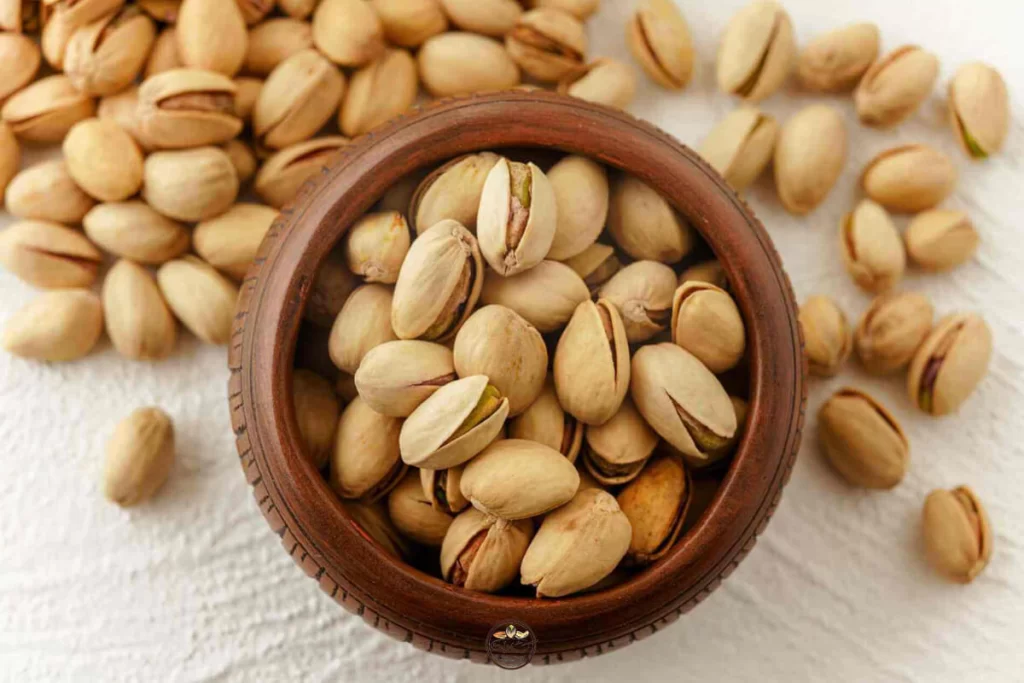
Iranian pistachio with variety and high quality has occupied a large amount of pistachio production and export, and the taste and color of this product has made it an indicator for measuring the quality of pistachio in other countries of the world. In addition, the variety of Iranian pistachios is very large, and its four export examples include Fandghi pistachio, Akbari pistachio, Kale Ghochi pistachio and Ahmad Aghaei pistachio, which account for a large share of exports to foreign countries. This variety of pistachio in Iran reaches more than 60 types, while the American pistachio exists in only 3 or 4 types. Iranian pistachios have great advantages over foreign pistachios, which you can refer to in the article we have written about the difference between Iranian pistachios and foreign pistachios.
Export amount of pistachios in Iran
According to the statistics published by the Customs Organization in 2016, this year Iran has exported about one billion and 181 million dollars of pistachios and has exported this amount to more than 72 countries. According to published statistics, Iran’s first customer this year was Vietnam with a purchase of 185 million dollars, and after that, Hong Kong was the second customer of Iranian pistachios with a purchase of 145 million dollars. One of the most important European customers of Iranian pistachios is Germany. This year, Germany, as the most important customer of Iranian pistachios, imported 144 million dollars of Iranian pistachios.
A poem of pistachio and Iran’s cities
In Iran’s vast and arid land,
Where desert sands stretch hand in hand,
Grow pistachios, green and grand,
A treasure cherished across the land.
In Damghan’s fields, they proudly thrive,
Abbas Ali’s fame does strive,
While Rafsanjan’s nuts, so alive,
In “Pistachio City,” they thrive.
Kerman’s orchards, a sight to see,
Beneath the sun’s relentless spree,
Akbari pistachios, so free,
Paint the landscape with verdant glee.
Yazd and Qazvin, in their own right,
Contribute to this pistachio flight,
Their flavors blend, a pure delight,
In Iran’s pistachio story, bright.
So let’s savor Iran’s wondrous sight,
Its pistachios, a sheer delight,
Bearing the essence of each city’s might,
They grace our world with pure delight.
Final thought
In exploring the world of pistachios, it’s evident that their diversity extends beyond mere regional boundaries. While cities like Damghan and Rafsanjan are celebrated for their pistachio production, the true depth of Iranian pistachios lies in the nuances of cultivation found in cities such as Kerman, Yazd, and Qazvin. Understanding the distinct characteristics contributed by each city unveils the rich tapestry of Iranian pistachios. From the iconic Abbas Ali Damghan pistachios to the revered Akbari pistachios of Kerman, each variety carries its own legacy, shaped by unique weather conditions, soil compositions, and cultivation methods. By delving into the intricacies of pistachio production based on city-specific attributes, we gain a deeper appreciation for the craftsmanship behind this beloved nut.
Leave a Reply